
Investment allocators and financial advisors regularly evaluate how strategies contribute to portfolio growth and manage risk during market declines. Trend-following is one approach to consider to help, but its usefulness depends on its design, its limitations, and its role alongside other holdings.
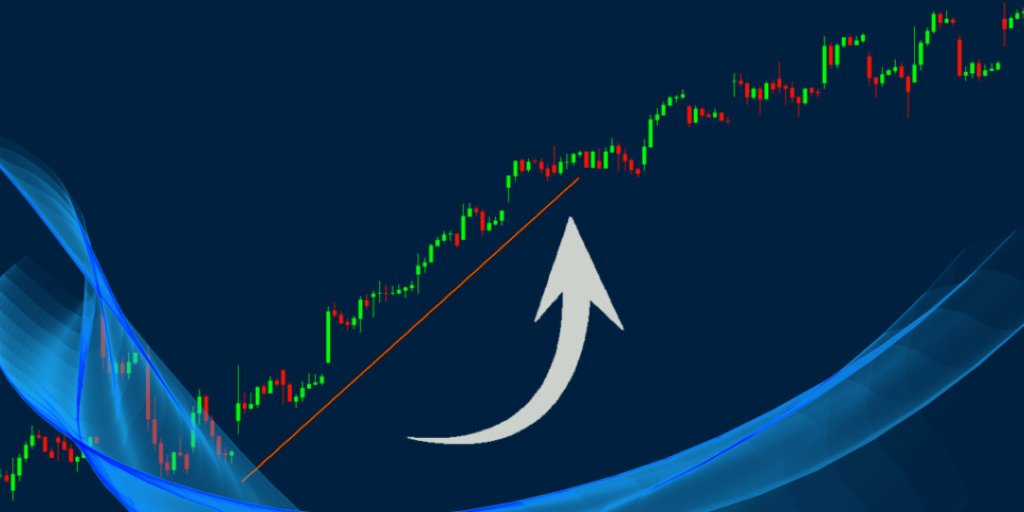
Trend-following investing is a systematic investment approach that compares current market prices with past prices to determine if something is in an uptrend or downtrend; investing and taking risk when the trend is up and avoiding when the trend is down. Trend-following is designed to react, not forecast. Rather than trying to predict a market top, bottom, recession, or recovery, a trend-following strategy uses predefined signals to buy and sell securities after a market move appears to be underway. Trend-following strategies seek to participate in sustained advances, reduce allocations during declines, or take positions that may benefit when markets fall.
For an advisor or allocator, the key question is whether a trend-following strategy’s expected behavior can complement the client’s core holdings and objectives over time.
This article explains how trend-following works, the market environments in which it may be more or less effective, how it differs from momentum investing, and the questions advisors and allocators should ask before deciding whether a trend-following strategy fits a client portfolio.
What Trend-Following Means
Trend-following is a systematic investment discipline that matches portfolio positions to persistent price trends. Rather than deciding which asset is most attractive relative to its peers, a trend-following asset manager may ask a different question: Is a particular market moving higher, lower, or without a distinct direction?
Trend-following managers translate the answer into portfolio decisions using predefined measures such as moving averages, price breakouts, or other trend indicators. The process may increase or maintain holdings in markets with established upward trends, reduce stock allocations when trends weaken, or take defensive positions in markets with established downward trends. As a result, the strategy may participate in part of a market decline before reducing risk and may miss part of the early recovery after a decline ends.
The discipline’s defining feature is that it acts on confirmation rather than forecasts. For allocators, the relevant question is whether that trade-off—accepting some delayed response in exchange for a repeatable decision process—fits their client’s objectives.
When Trend Following May Work
Trend-following strategies typically have a better chance to identify a sustained market move, establish a position, and hold it long enough to benefit when:
Long-lasting moves in either direction
Trend-following generally may work well when a market moves persistently higher or lower for several months or longer. The direction matters less than the move’s durability. A sustained advance can allow a strategy to remain invested as the advance continues. A sustained decline can give the strategy time to recognize weakening conditions and reduce exposure. In both cases, the strategy needs a trend to last long enough for its signals to confirm the move and guide positioning.
Long-lasting changes in economic conditions
Trend-following strategies may find more opportunity when changes in inflation, interest rates, economic growth, policy, currency values, or commodity supply and demand produce sustained price moves. These indicators can influence several markets at once, but their impact isn’t always immediate or uniform.
Trend-following managers don’t need to forecast the next inflation report, central-bank decision, or geopolitical event. Instead, the strategy relies on market behavior after conditions begin to change. Trend-following is designed to respond to trends, not predict the events that may create them.
Different trends across asset classes
Managers who invest in several asset classes, in other words, a multi-asset strategy, may have more opportunities when markets move in different directions. Stocks may be declining while a currency strengthens. The same economic outcome can influence several positions.
Advisors and allocators should assess whether apparently different positions create overlapping exposures and how the manager monitors those relationships.
Market liquidity
When evaluating implementation, advisors and allocators should consider whether the markets and instruments traded can accommodate the strategy’s required transactions, particularly when signals change or market conditions become stressed.
Trend following is generally easier to implement in large, actively traded markets, where securities or contracts can be bought and sold efficiently. Liquid markets can help limit bid-ask spreads, execution problems, and market impact.
This is important for faster strategies, which may respond to changing signals more frequently. In less-liquid markets, trading costs and difficulty completing transactions can reduce or eliminate the return a strategy is designed to capture.
When Trend Following May Not Work
A trend-following investment strategy may perform poorly when market moves are short-lived, market direction changes suddenly, or signals repeatedly turn positive without a trend. Here are three reasons why:
Sudden market reversals
Sudden market reversals can hurt a trend-following strategy. For example, a sharp one-day decline may not create enough evidence for a slower-moving strategy to change allocations. If the market immediately recovers, the strategy may then face a second challenge: its signals could turn defensive just as prices rebound.
Trend-following may be better suited to responding to a prolonged market decline than to avoiding all abrupt losses. It is not a substitute for immediate crash protection or a guarantee against drawdowns.
Directionless or choppy markets
Trend-following also struggles when markets rise and fall within a somewhat narrow range and don’t establish a lasting direction.
A trend-following manager may see signs of a new uptrend or downtrend and adjust the portfolio accordingly. But if the market changes course soon afterward, the manager may have to reverse direction and often take a loss.
Investors call this pattern a whipsaw. A whipsaw occurs when a trading signal leads a manager to change positions shortly before the market moves in the opposite direction. Repeated whipsaws can create a series of smaller losses, additional trading costs, and missed participation in a market that ultimately goes nowhere.
How quickly a strategy responds to market changes
Trend-following strategies differ in how quickly they act when markets change. A faster strategy may respond to price moves over days or weeks, while a slower strategy may wait for trends lasting several weeks or months. Faster approaches can react sooner but may make more false moves; slower approaches can filter noise but may react later.
For the allocation decision, consider whether that response speed is consistent with the strategy’s intended role and the portfolio’s tolerance for delayed exits, missed rebounds, and repeated position changes.
5 Questions About Evaluating Trend-Following Managers
The following questions can help determine whether a trend-following manager’s process matches what an allocator or advisor needs for their clients:
Why can two trend-following strategies behave differently in the same market?
At issue. “Trend-following” describes a discipline, but not a shared or uniform portfolio. An equity strategy that can move to cash has different opportunities and limitations from a multi-asset strategy. Their responses to falling markets can differ accordingly. One strategy may seek to limit losses by reducing allocations; another may seek gains from downward trends. Signal design, response speed, and portfolio construction further influence results. A shared label does not establish that two strategies serve the same purpose.
McElhenny Sheffield’s approach. We use ETFs to obtain exposure to market segments and adjust allocations as conditions change. Our defensive process may reduce equity holdings and shift to cash or cash equivalents. That differs from seeking profits through short positions in declining markets.
Why may trend-following work better in a prolonged decline than in a sudden selloff?
At issue. A sustained decline gives signals time to register weakening conditions and a manager time to reduce allocations before the decline ends. An abrupt selloff may occur before signals change. If prices then rebound quickly, the strategy can become defensive just as the recovery begins.
McElhenny Sheffield’s approach. We may reduce equity allocations as market-based signals weaken. Because the process responds to evidence rather than anticipating turning points, we may participate in the early stages of a decline and re-enter after part of a recovery has occurred.
When can trend-following disappoint even if the manager follows the process correctly?
At issue. A disciplined process can still produce unfavorable results. In directionless markets, signals may repeatedly prompt position changes that reverse soon afterward. During sharp recoveries, a strategy may remain defensive while equities rise. These outcomes can reflect the strategy’s limitations rather than a failure to implement its rules.
Results should be considered alongside market conditions and the strategy’s stated objectives.
McElhenny Sheffield’s approach. Our flagship strategy is designed for sustained changes in market direction. Choppy markets and rapid reversals can produce losses or missed participation. We monitor holdings and overlapping exposures, emphasize liquid investments and do not use leverage, but these controls do not eliminate market or signal risk.
How can implementation costs change the value of a trend-following allocation?
At issue. A strategy’s usefulness depends on more than its signals. Trading frequency and liquidity can influence how effectively the process translates into net results. More frequent activity is not necessarily more effective, and ETF use alone does not establish tax efficiency.
McElhenny Sheffield’s approach. We trade when our signals call for a portfolio change and use liquid ETFs to support efficient execution. Our focus is on results after management fees and trading costs; that should not be interpreted as a promise of tax efficiency.
How does trend-following differ from momentum investing—and what happens when they are combined?
At issue. Combining the approaches can give each a distinct job. Relative strength can help select among available investments, while trend signals help determine the appropriate level of market exposure. The resulting behavior depends on how the rules interact, particularly when relative leadership persists within a weakening market.
McElhenny Sheffield’s approach. Our investment process evaluates market direction and relative strength across an ETF investment universe. These signals guide investment selection and decisions about whether conditions support greater equity exposure or a more defensive allocation.
What Investors Should Know About Trend-Following Investing
A rules-based trend-following strategy can give investors a disciplined way to respond to sustained market trends. As an investment sleeve in a total allocation, the strategy may help investors grow their portfolios when the market rises and protect them when the market falls.
Some asset managers combine momentum and trend-following strategies to give advisors and allocators a productive way to pursue client growth and capital preservation objectives. The two strategies can also reinforce one another. Momentum investing can help identify securities on the upswing, while trend-following can help guide shifts in equity allocations as market trends strengthen or weaken.
Read more about when momentum investing strategies may work (and when they don’t).
About McElhenny Sheffield
McElhenny Sheffield believes that avoiding material losses is the foundation of successful long-term investing. Risk management and capital preservation are the firm’s top priorities.
The firm is committed to protecting investors’ financial futures through a rules-based, tested, momentum-driven, trend-following tactical ETF strategy, and positioned as a tactical satellite portfolio for advisors who need to protect their clients’ core portfolio while still seeking growth.
Clients include independent-thinking investment advisors across the U.S., large investment allocators, and high-net-worth individuals and families looking for a second opinion. McElhenny Sheffield also provides sub-advisory services for RIAs and financial advisors. The firm was founded in Dallas, TX, in 2000, and manages more than $780 million in assets as of September 30, 2026.
Important Information
The information contained in this article has been obtained from sources believed to be reliable; however, its accuracy, completeness, and timeliness cannot be guaranteed. Any opinions or estimates reflect the author’s judgment as of the date of publication and are subject to change without notice. This material is provided for informational purposes only and should not be construed as legal, tax, or investment advice. Investors should consult their tax advisor or legal counsel for advice and information concerning their particular situation. See other important disclosures below.